Puppy scams typically begin with stolen or AI-generated images and listings that are designed to look like real adoption or breeder posts, often featuring purebred dogs at unusually low prices, and “rehoming” stories.
Once a buyer engages, scammers move the conversation through repeated reassurance and supporting material – photos, videos, fake paperwork, contracts, and shipping arrangements – all leading toward payment for an animal that is not available or does not exist.
These same tactics extend beyond puppies to cats, exotic pets, livestock, and even restricted or illegal animals, with scammers adapting the same template across whatever species attract demand.
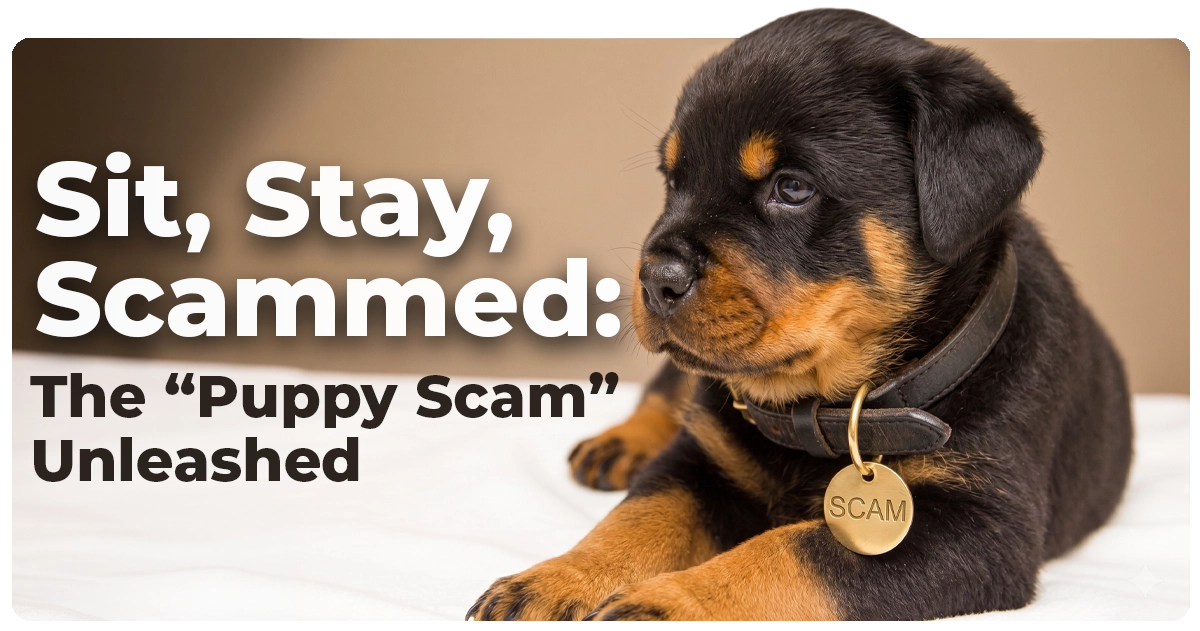
Sit, Stay, Scammed: The "Puppy Scam" Unleashed
June 4th, 2026
Main Takeaways
You’re scrolling through social media when you see it - the most adorable, unbearably cute photo of a puppy you have ever laid eyes on.
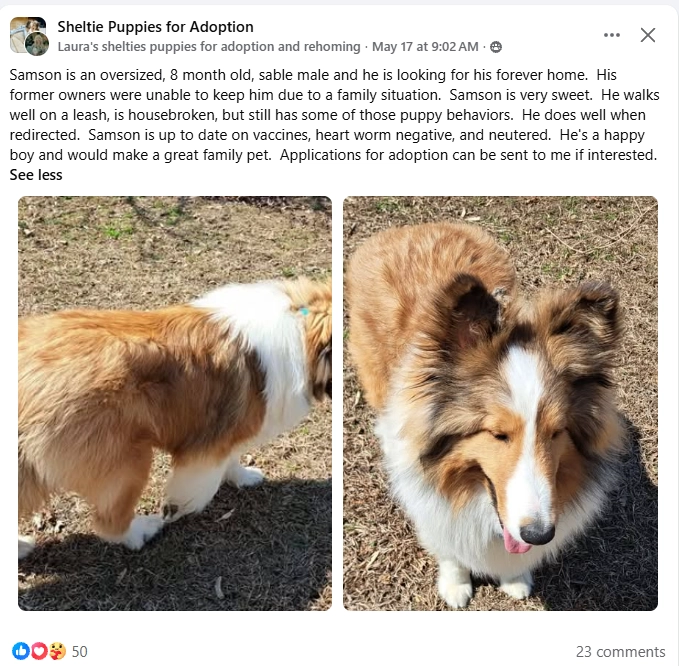
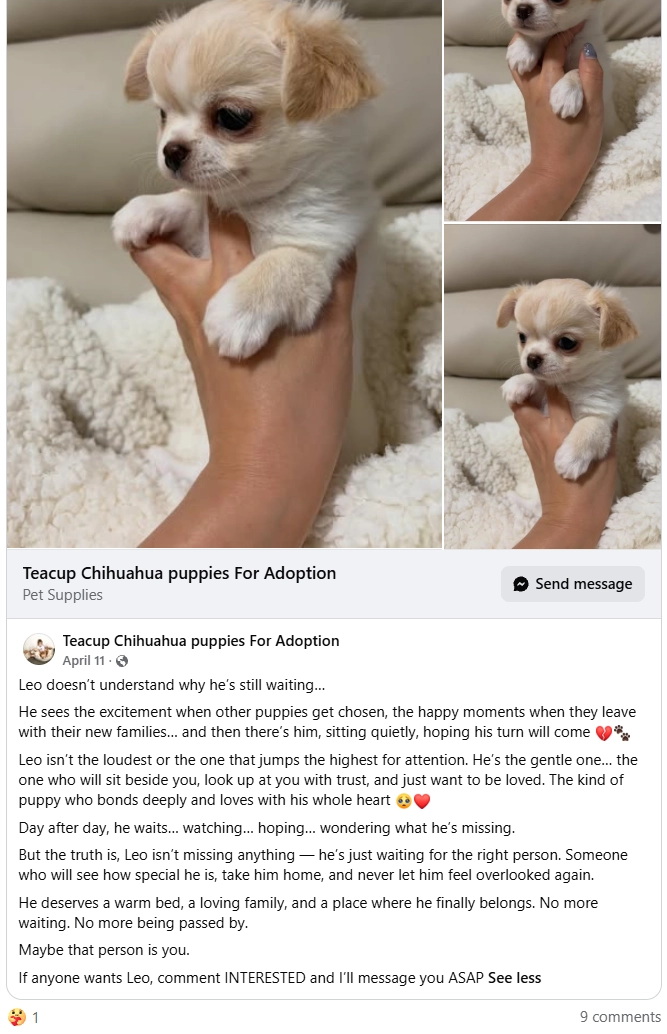
It’s the exact breed you’ve always wanted, listed at a price that seems almost too good to be true. Maybe it’s even “free to a good home.” There is a heartbreaking backstory – a family member passed away, they’re moving overseas, or they have health problems that make caring for the dog impossible. The puppy is already vet-checked, socialized, and potty trained. They have paperwork and vet records ready to send. It’s clear the seller loves this puppy so much and wants nothing more than for it to go somewhere safe, somewhere it will be loved.Could the stars actually be aligning?
Nope, it’s most certainly a scam, one that bites a lot more people than you might think.
Puppy Scams 101
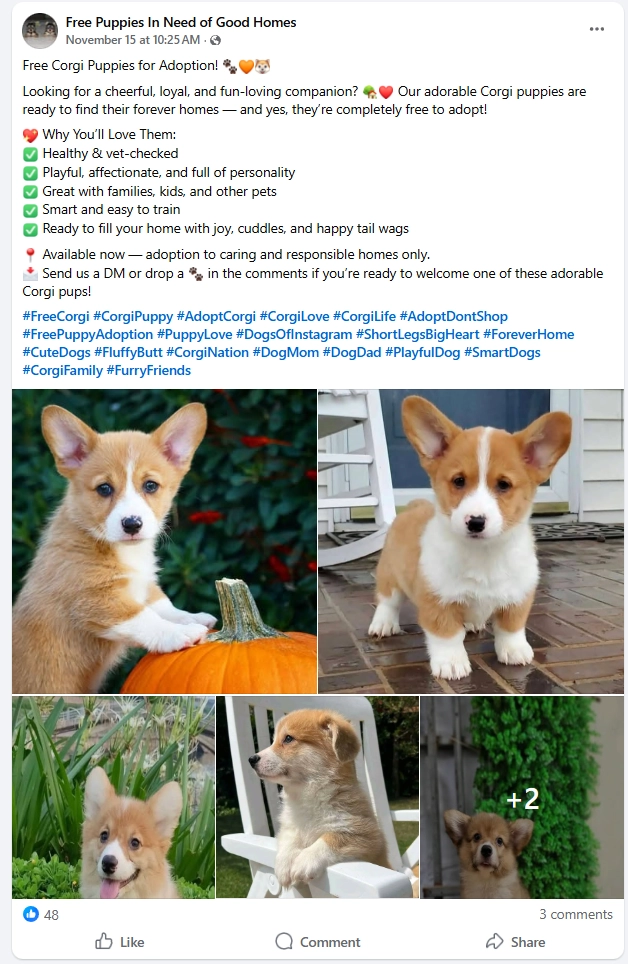
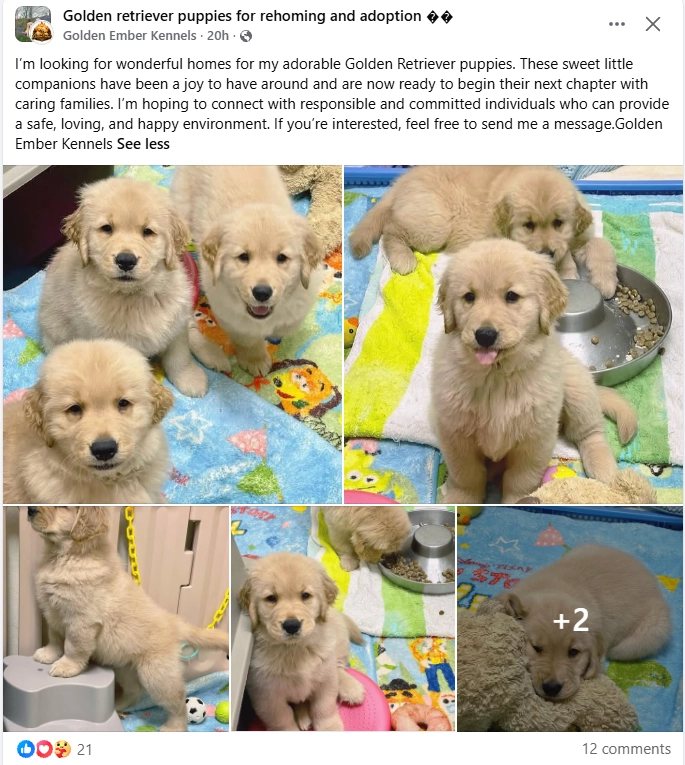
At a basic level, puppy scammers manipulate victims into paying for a dog or other animal that they will never get. Scammers steal photos and videos of real animals from breeders, rescue organizations, and everyday pet owners who posted their pet online. These days, many are using AI to generate convincing, but entirely fake pictures.
Then they spam the internet with listings, advertising the animal for sale at a suspiciously low price. They might frame this as a small “rehoming” or “adoption” fee to ensure serious buyers only. Sometimes they’ll even claim the puppy is free, as long as you can cover the shipping costs.
Why Puppy Scams Work
Puppy scams succeed because scammers are extremely good at manipulating emotions and creating urgency, giving potential victims little time to think and forcing them into quick decisions. Victims become emotionally invested, excited by the opportunity of having their dream dog, before realizing there was never a real dog involved at all.
The story the seller shares is crafted to do just this. The dog is perfect by every measure, already trained, socialized, and vet-checked. There’s often a heartbreaking backstory attached - some circumstance where the animal tragically needs to be rehomed. They want you to feel that this puppy needs you, and that you can save them and give them the life they deserve. People stop thinking like shoppers and start thinking like rescuers.
Everything But the Actual Dog
If you contact the seller, they will be overjoyed to tell you about the dog, even sending pictures and videos on request. They’ll happily and confidently answer your questions, send you extra pictures and videos, and reassure you that the dog is perfect in every way. Then, they shift to trying to steal your money.
Low-effort scammers simply ask for a deposit, promising to deliver the dog right to your doorstep, then disappear once you pay. But others craft situations that are far more involved, designed to keep victims on the hook for a dog that does not exist.
Some scammers come prepared with paperwork – forged certificates, stolen pedigrees, fake vaccination records, and even professional-looking contracts ready to go. If you’ve never bought a dog before, it can feel completely legitimate.
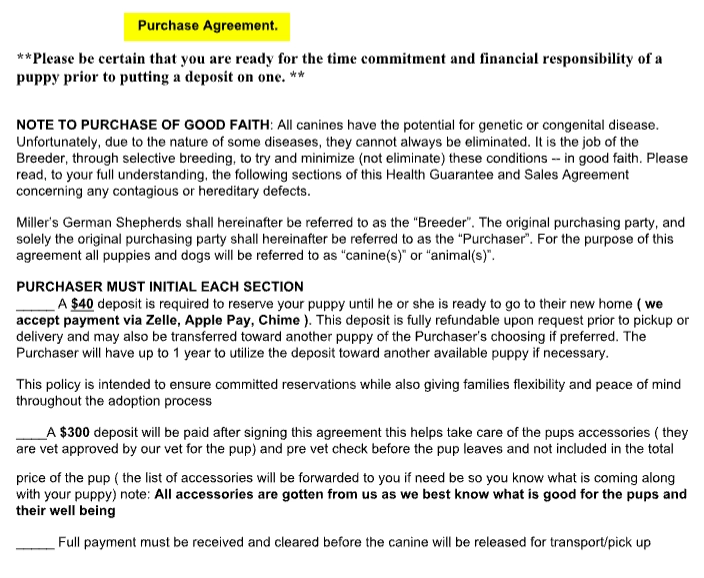
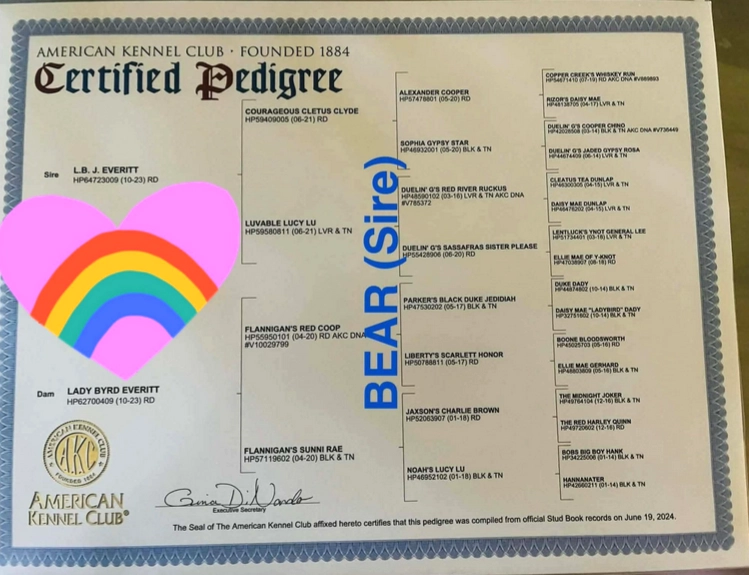
Scammers often include a whole shipping component, agreeing to send the puppy to wherever the victim is located. This often comes with promises that the dog will never travel alone and will be accompanied by a “pet nanny” from the moment it leaves their care to the moment it arrives on your doorstep.
In more sophisticated scams, they may coerce the victim into using their own scam shipping or courier service. Some of these scammers go a step further and set up entirely fake shipping company websites complete with customer support, all managed by the same scammer or group of scammers.

The total cost initially sounds reasonable, especially compared to what the breed would normally cost. You pay – by Zelle, Chime, wire transfer, gift cards, or crypto – because that’s what they asked for. All of these share one feature scammers know well: once the money is sent, it’s nearly impossible to trace and reverse.
Then the “emergencies” start:
The puppy needs a special climate-controlled crate.
There’s a customs hold at the airport and a fee needs to be paid.
The airline requires special insurance.
The puppy gets sick and needs to go to an emergency vet; sometimes surgery or expensive medication is required.
Cha-ching, cha-ching, cha-ching! Of course, at this point, you agree to pay. What choice do you have? It’s an ultimatum: pay now or lose everything you’ve already sent, and the puppy.
This is how victims end up being strung along, sending hundreds or thousands of dollars over days or weeks before they fully understand what is happening.
Taking You Through a Puppy Scam
On one of our Facebook profiles, there is no shortage of puppy scams. Because we have engaged with a few of them, the algorithm has taken note and now aggressively pushes them into our feed – about every third post is another fake puppy listing.
Unfortunately, we are not exaggerating.
But what actually happens when you engage with a fake listing?
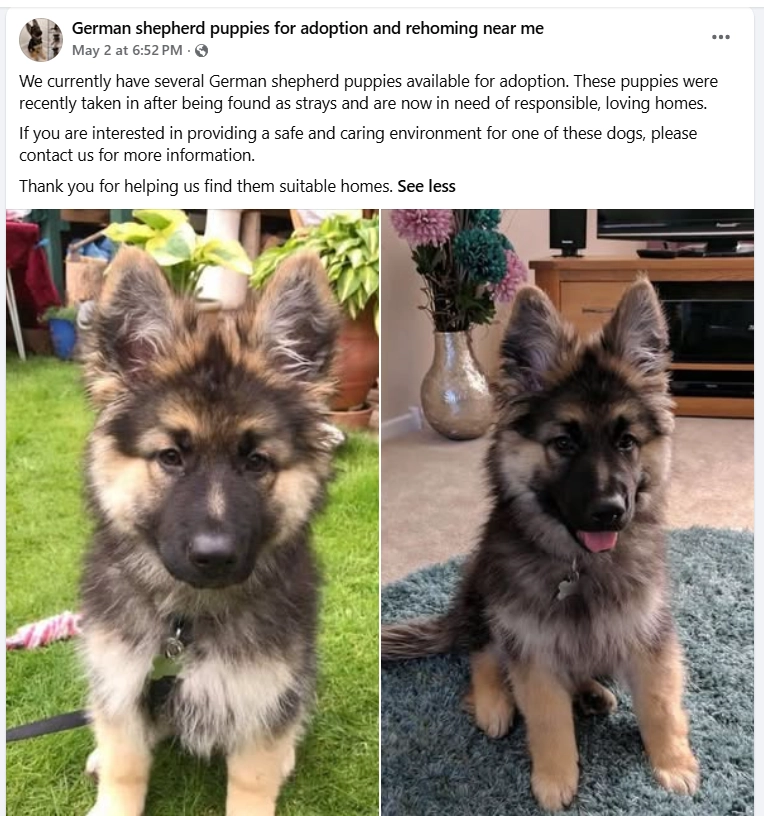
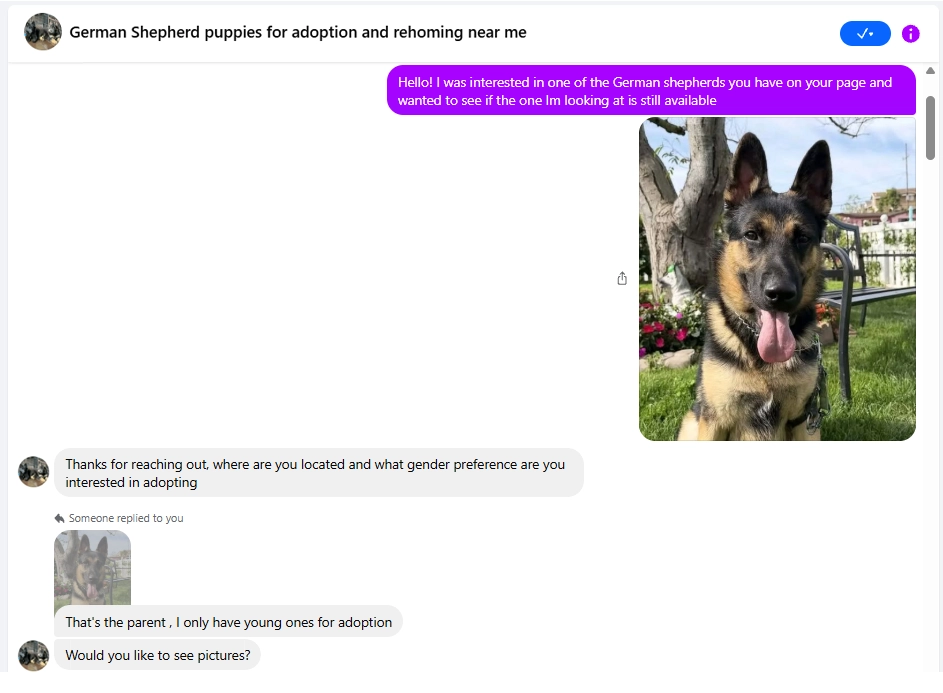
Meet Rex - a beautiful German shepherd that came across our feed. Super cute dog, right? Of course, we’re interested in adopting this sweet guy, saddened that he’s being re-homed, and fully committed to giving him the stable, comfortable home he deserves.
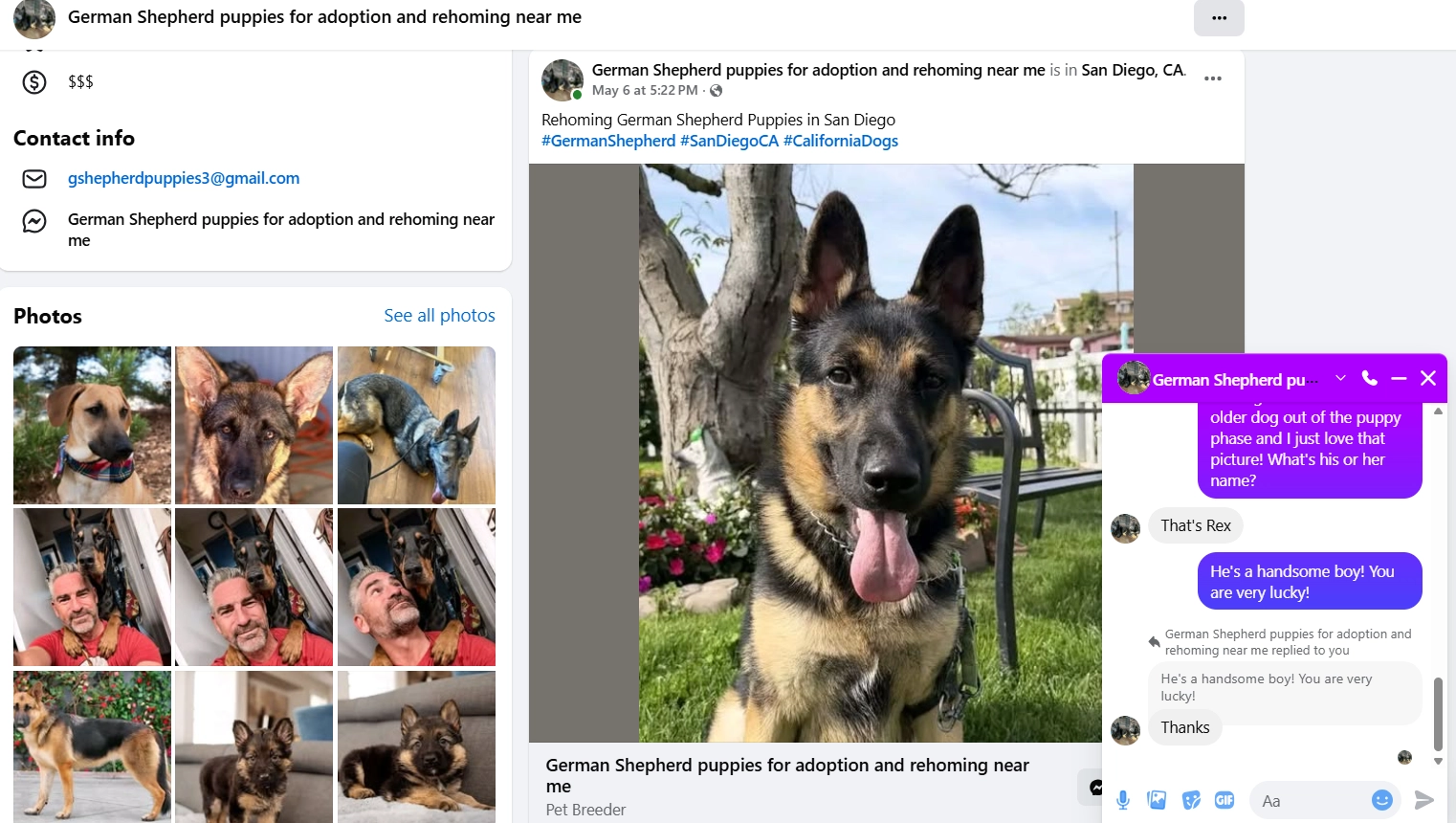
After a brief conversation with the owner of the page “German Shepherd puppies for adoption and rehoming near me,” we learn Rex isn’t actually available for adoption. We’d be devastated, if this were actually Rex.
A quick reverse image search tells a different story: this good boy is Bandit, a German shepherd who was formerly listed for adoption through a legitimate rescue. We hope that Bandit has found a loving home!
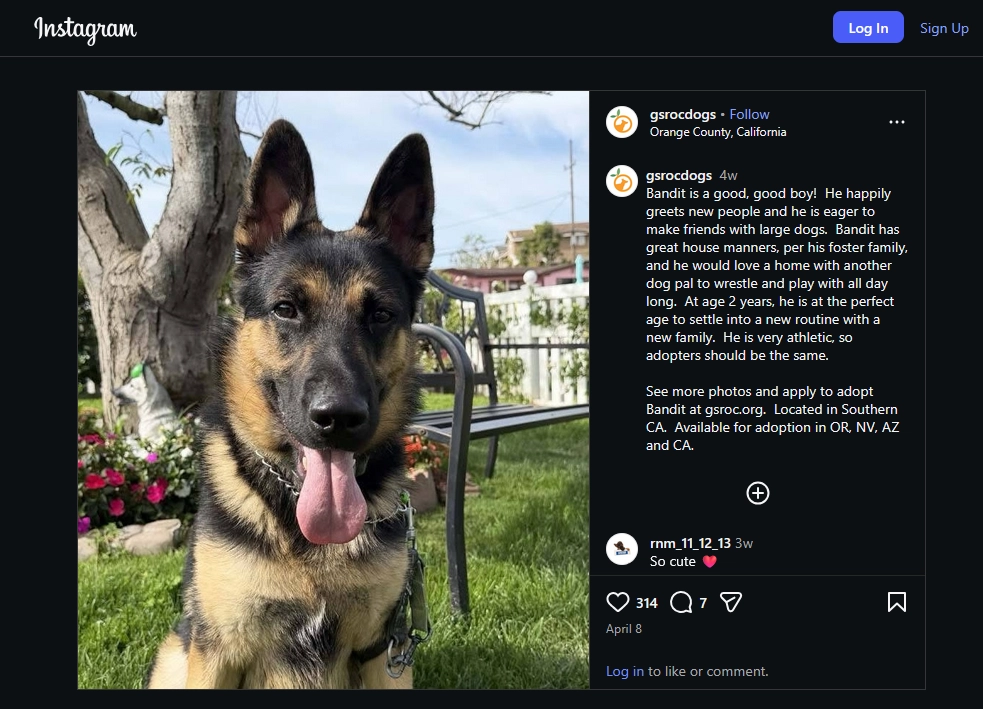
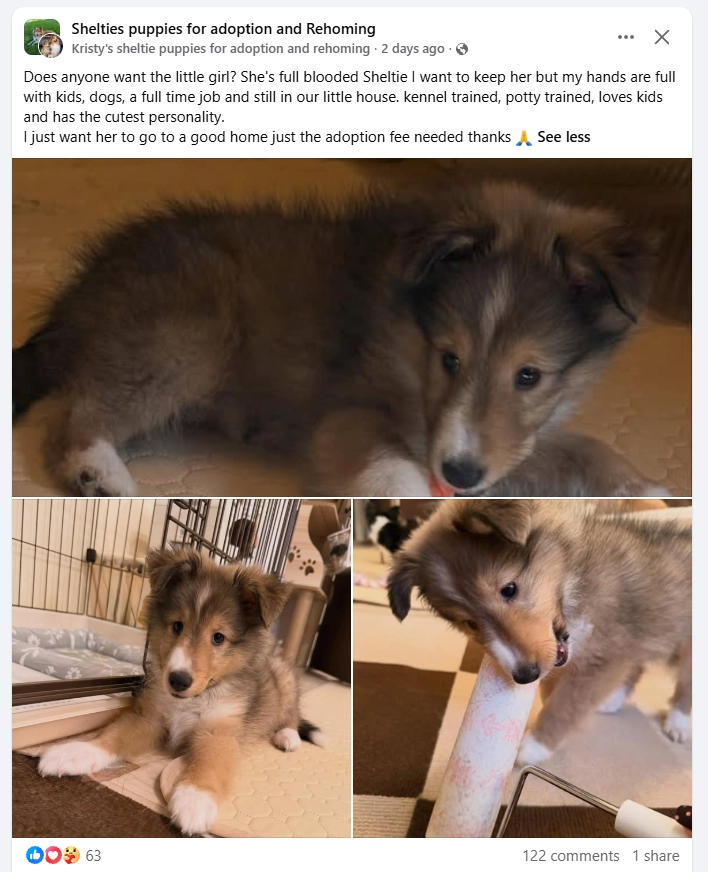
Anyway, back to “Rex.” Sadly, he isn’t available, but the seller has good news – Rex’s puppies are! The scammer steers us towards Lucy, a 12-week-old puppy ready to go with shots done, dewormed, and apparently even potty trained. How could we say no?
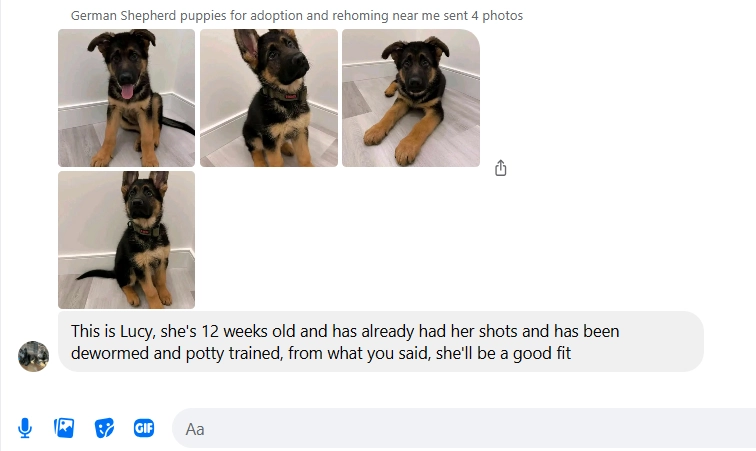
There was just one problem. “Lucy” is not really Lucy. Another reverse image search shows that this puppy is named Buck, and Buck already has a loving family.

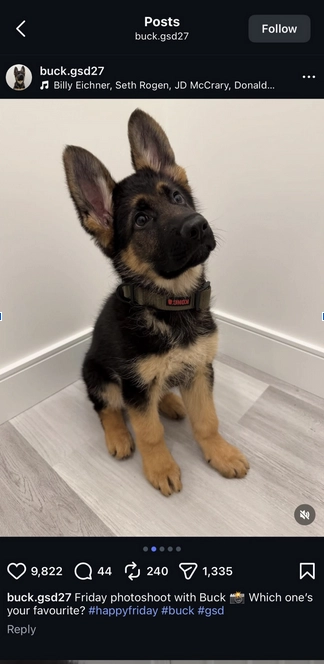
Photos of Buck, like many other puppies posted online, have since turned up in multiple scam listings across different platforms under different names and stories. Scammers seek out publicly-posted pictures and steal them to carry out their scams, and in many cases, the real owners of these pets will never know their photos are being used to scam strangers online.
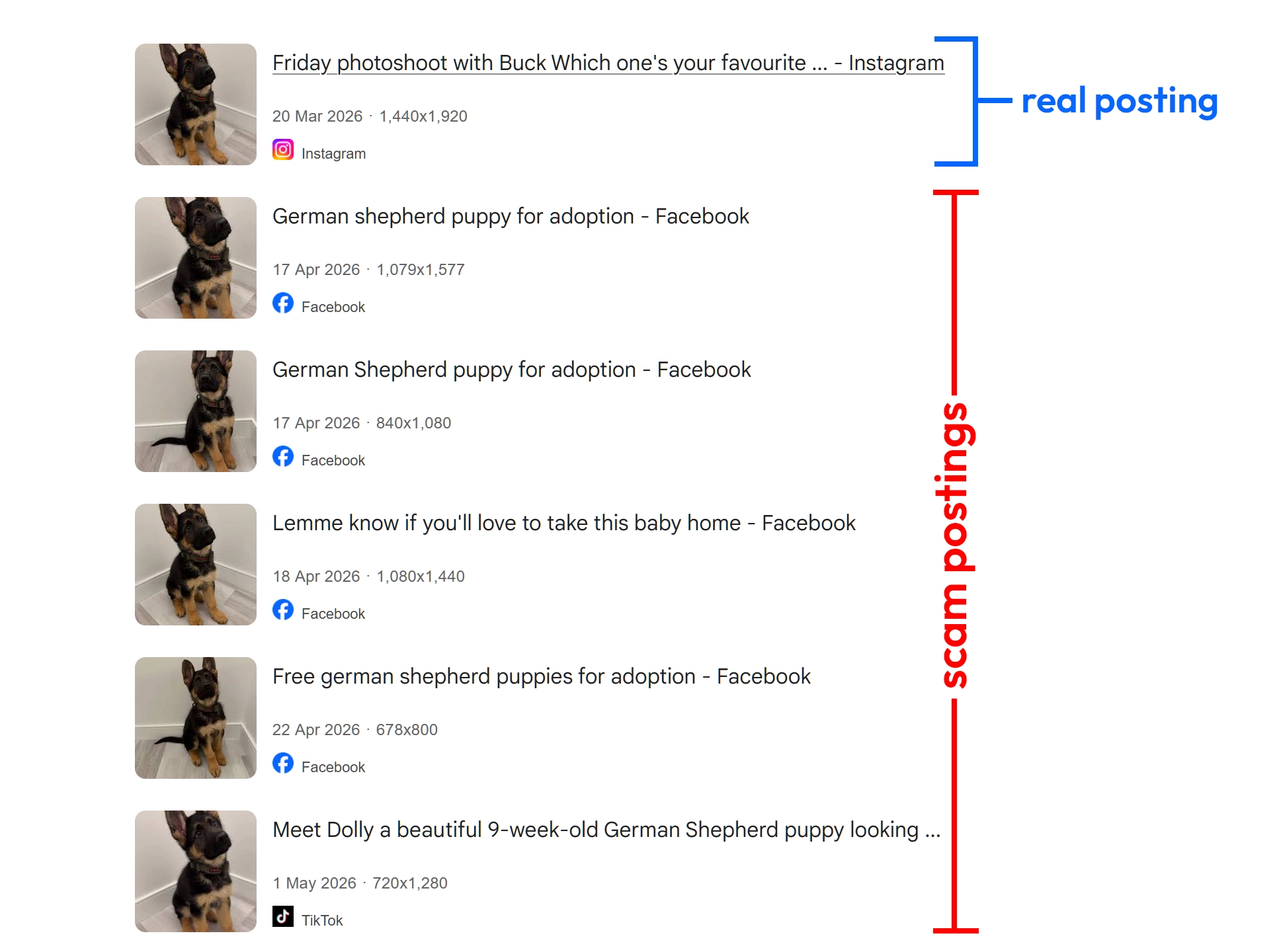
Reverse image searching is not foolproof. Scammers sometimes use brand-new photos or AI-generated images that will not appear elsewhere online. But, it can still be an effective tool to quickly spot fake listings.
The Scam Doesn’t Stop at Puppies
These scams are not limited to dogs. While puppy scams are overwhelmingly common, cat scams (especially when it comes to more expensive, trendy breeds) are frequently reported as well.
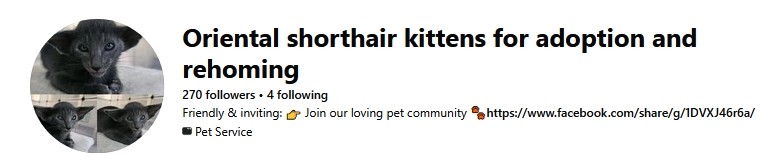
Scammers also target people looking for exotic pets like hedgehogs, sugar gliders, birds, reptiles, and other high-demand animals. The same goes for farm animals like horses, cows, and goats.

There’s even a whole corner of this fraud built around animals that require permits or are outright illegal to own as pets, with scammers that happily promise they can get one to you without any of that hassle.

About the Facebook Listings
Here is something important many people do not realize:
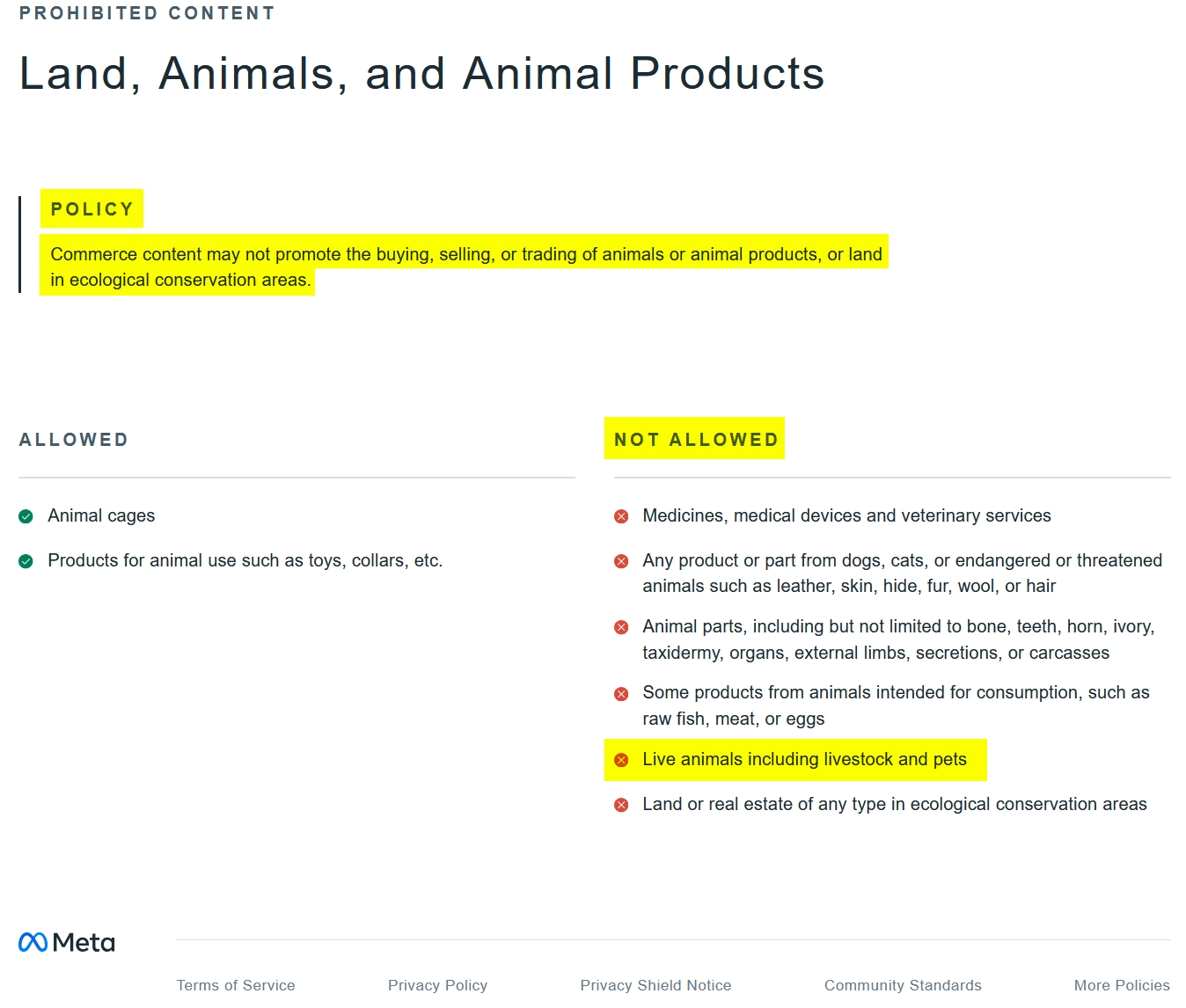
Selling and offering animals for adoption on Facebook violates Meta’s own rules. Meta’s Commerce Policy clearly states that “the buying, selling, or trading of animals” is explicitly prohibited. That applies to Marketplace, buy/sell groups, pages, and other areas of the platform. That means when you come across a puppy for sale on Facebook, you’re already looking at something that breaks the platform’s terms of service.
Yet these listings remain everywhere.
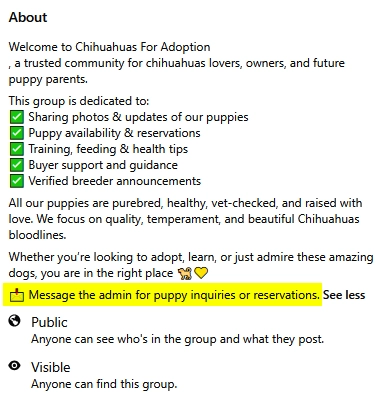
Scammers work around content filters and automated moderation systems by avoiding certain keywords. They post in “discussion” or “community” groups they run instead of using sale listings. Many of these scam pages build large followings by posting harmless pet content between scam listings. Then they encourage people to inquire about puppies by direct messaging the page admin (the scammer).
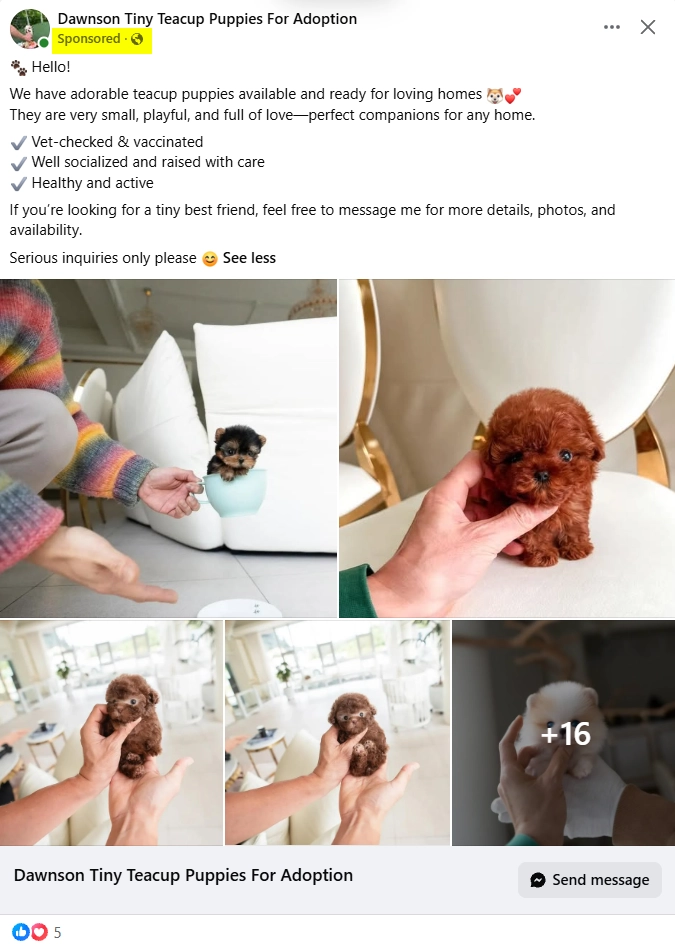
Others take out paid advertisements to promote their scam. We’ve covered this broader issue in another article How Sponsored Ads are Fueling a New Wave of Tech Support Scams, diving into how sponsored scam ads continue slipping past Facebook’s moderation systems and reaching large numbers of users.
Despite violating Meta’s own rules, many of these advertisements are still approved and promoted through Facebook’s advertising platform. Scammers are literally paying the platform to help them find more victims, and the burden of protection falls on the user.
Sniffing Out Scams
The good news is that scammers are not particularly creative. They tend to follow the same patterns reliably enough that once you know what to look for, fake listings become easier to spot.
The price is too low. Purebred puppies are expensive, sometimes thousands of dollars depending on the breed. A deeply discounted or free purebred dog is bait, not a bargain.
The photos and videos are stolen or created with AI. Reverse image search often reveals the truth, though this can’t be entirely relied on.
The breeder is unable to meet in person and dodges video calls. Many (but not all) scammers will not communicate outside text or email and will make excuses for why this can’t happen. Be aware that video calls are no longer a guarantee - scammers can now use AI-generated video to fake a real person with a real puppy on camera.
The breeder only accepts payment through methods you can’t reverse. Wire transfer, Zelle, gift cards, Chime, crypto – these are chosen specifically because the payments are almost always impossible to claw back.
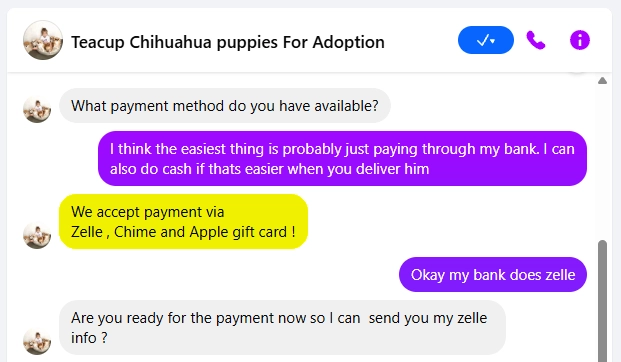
Immediate payment is always required. You will never be able to meet the puppy before paying. Some scammers will agree to schedule a visit, but only if you put a deposit down to reserve a puppy or pay a “rehoming” fee to prove you are a serious buyer first.
They create a high-pressure situation. If the seller is pushing hard for a quick deposit, citing other interested buyers or creating a sense of urgency, that’s a huge red flag to take seriously.
What a Real Breeder Looks Like
One of the best things you can do in any situation involving money or information is to ask questions – lots of them.
In this case, ask anything and everything you want to know about the breed, the breeder, and the available puppies and their parents. Responsible breeders are probably going to ask you more questions than you ask them. They will ask about your lifestyle, your living situation, and your experience with the breed – they vet you as much as you should vet them.
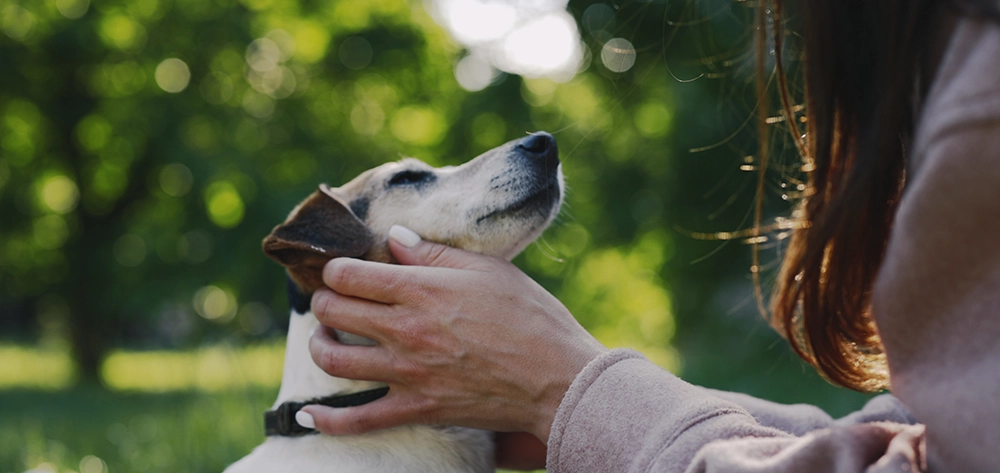
They should also be willing to let you:
Meet the puppy in person and see where it was raised.
Meet the parents when possible.
Review health records and screenings for both puppy and parents.
Review the purchase contract and return policy in case things don’t work out.
A reputable breeder or rescue will never pressure you into sending a deposit or payment before seeing an animal.
If you found the seller through a social media posting rather than through a breed club or a personal referral, ask hard questions before you send a dime. Most legitimate breeders are also easy to verify outside social media. They often have histories connected to breed clubs, veterinary references, dog shows, local communities, or established rescue organizations.
If someone refuses to video chat, refuses to meet, avoids basic questions, or immediately pushes for deposits or shipping fees, walk away.
Final Thoughts
The internet has made finding a pet easier than ever, but it has also made it easier than ever for scammers to exploit animal lovers. While social media can be useful for discovering local rescues and breeders, buying or rehoming animals entirely through Facebook listings and direct messages is often a bad idea for everyone involved. Visit a local shelter or adoption event, or find a reputable local breeder who will meet with you and introduce you to the animals they have.
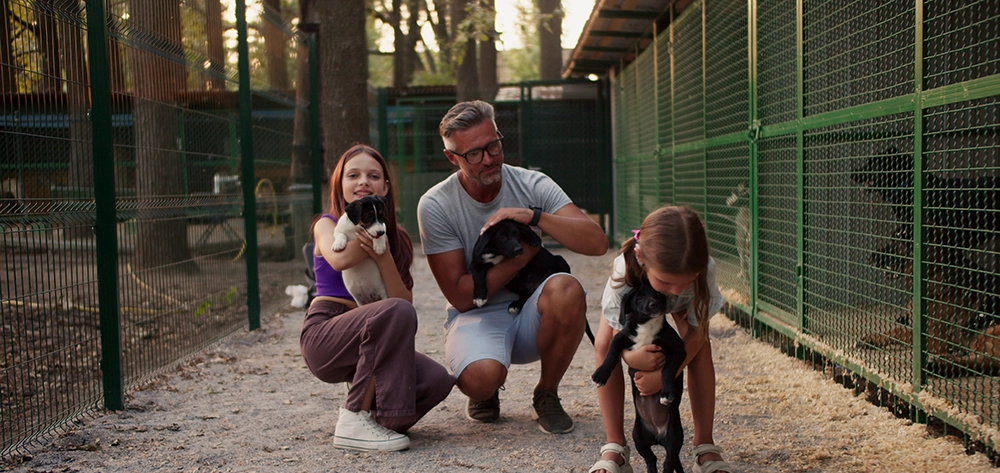
There are plenty of real pets out there waiting for good homes. Before you fetch your wallet, take a moment to paws and make sure a scammer doesn’t have you barking up the wrong tree.
- The Seraph Secure Team